
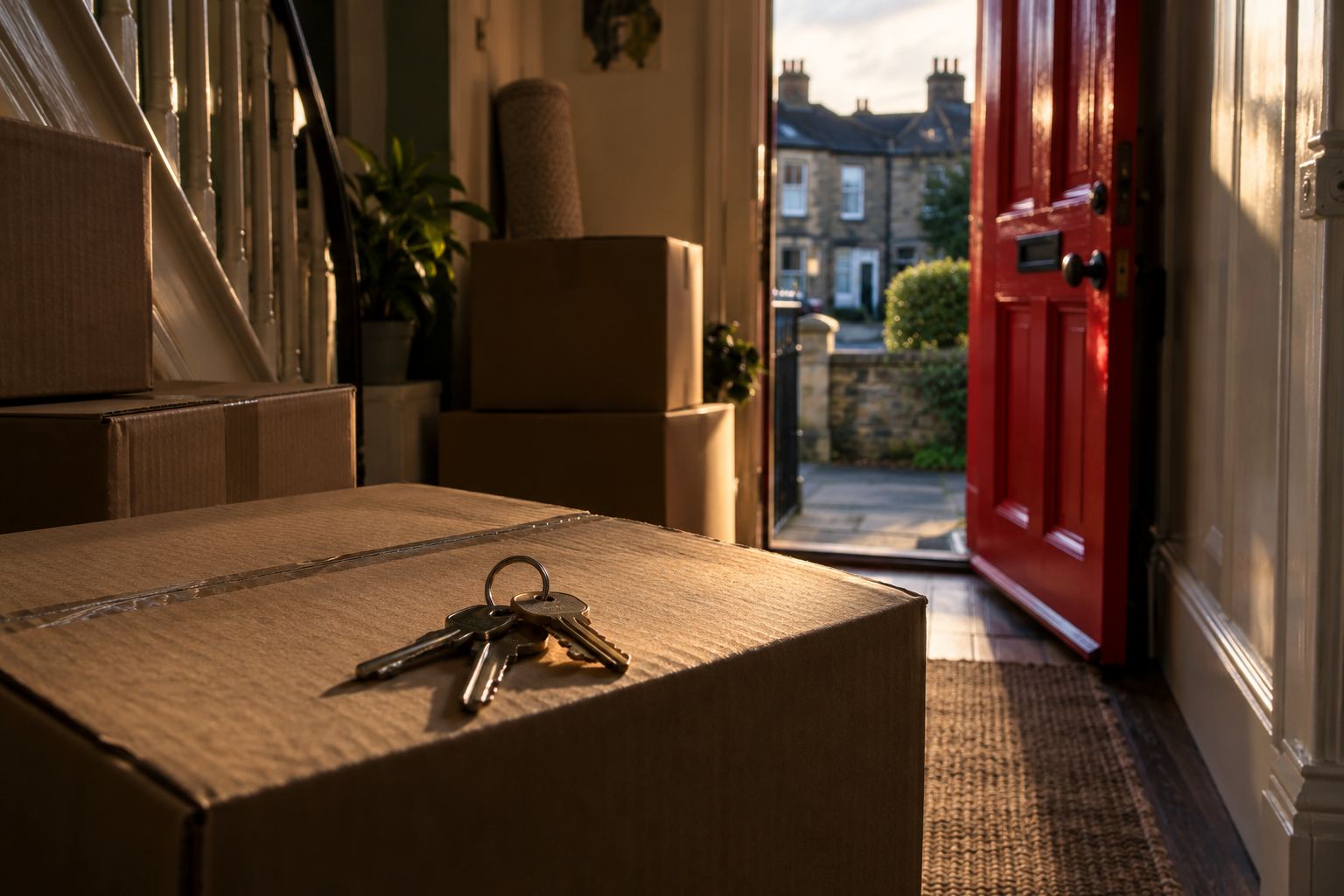
Yes, change the locks when you move house. You have no way of knowing how many keys to your new home are out there or who has them, and on most uPVC and composite doors it’s a quick job: swap the cylinder and you get brand new keys. It’s also the ideal moment to make sure your new locks are anti-snap rated.
Here’s who might still have a key, why it matters for insurance, and which locks to do first.
Who might still have a key to your new home
The sellers will hand over the keys they know about. That’s rarely all of them. Over the years, copies tend to end up with:
- The previous owners’ family and friends.
- Neighbours who fed the cat or took in parcels.
- Cleaners, carers, dog walkers and childminders.
- Builders, plumbers and other tradespeople who worked on the house.
- Estate agents who handled viewings.
- If the house was ever let, past tenants and letting agents.
None of these people are likely to be up to anything. The point is that you can’t get every key back, and you can’t know where they’ve all ended up. Changing the locks means the only keys that work are the ones in your hand.
The insurance angle
This is the bit most people don’t think about until it’s too late. Some home insurance policies exclude theft where there’s no sign of forcible or violent entry. If someone lets themselves in with an old key, there may be nothing to show how they got in.
The Financial Ombudsman Service has dealt with complaints where an insurer turned down a burglary claim for exactly this reason. In that case the ombudsman sided with the customers, but it’s an argument you don’t want to be having after a break-in.
So, two things to do when you move:
- Read the theft section of your new home insurance policy, including any wording about forced entry.
- Check whether it says anything about the type of locks on your doors.
Which locks to change first
You don’t have to do every lock in the house on day one. Start with the outside doors and work inwards:
- Front door. The one most likely to have spare keys floating about.
- Back door. Just as likely to have spare keys out there, and usually less overlooked.
- Patio and French doors. Most use the same type of euro cylinder as a uPVC front door.
- Any side or garage door that gives access to the house.
- Window locks. Check they all lock and that you’ve actually been given the keys. They’re easy to lose in a move.
- Sheds, gates and outbuildings. Lower priority, but swap any padlocks you didn’t buy.
Change the lock or just the cylinder?
On uPVC and composite doors, the part the key works is a euro cylinder sitting in the middle of the handle. Swapping it gives you new keys, and it doesn’t normally mean touching the handle or the multipoint mechanism. That’s why it’s usually a quick job.
Timber doors are different. They often have a mortice lock set into the door, sometimes alongside a night latch. Depending on the lock, it can be re-keyed or replaced. A locksmith will tell you which makes sense once they’ve seen it.
Use the chance to upgrade
If you’re changing cylinders anyway, don’t put another basic one back in.
For euro cylinders on uPVC, composite, patio and French doors, look for a TS007 3-star Kitemark or a Sold Secure Diamond (SS312) rating. West Yorkshire Police advice is to upgrade any euro cylinder that doesn’t meet one of these standards, and to make sure it doesn’t stick out from the door or handle. Our guide to anti-snap locks explains the difference between them.
For timber doors with a mortice lock, the standard to know is BS3621. According to the Master Locksmiths Association, a BS3621 mortice lock has at least 5 levers and drill-resistant hardplates, and is marked with the Kitemark and “BS3621”. Insurers’ requirements vary, so check what yours asks for.
For uPVC doors, it’s also worth checking the mechanism while you’re at it. If the handle is stiff, droops or only lifts when you push the door, get it looked at before it fails. Our guide to a floppy uPVC door handle explains what that usually means.
Your moving-in security checklist
Run through this in the first week:
- Ask the sellers how many sets of keys exist, and get every one they have.
- Change the front and back door cylinders or locks.
- Do the same on patio, French and side doors.
- Check every window locks, and that you have the keys.
- Look for key safes outside and change the code, or remove the safe.
- Change the alarm code if there’s an alarm.
- Reset garage door remotes and any smart lock or doorbell accounts.
- Read your home insurance policy’s theft and lock wording.
- Save a local locksmith’s number in your phone.
If you’re renting
If you’re moving into a rented home, talk to your landlord or letting agent before you change any locks. They may want to arrange it themselves, or need a copy of the new key.
When to do it
As soon as you can, ideally on moving day. It’s easy to mean to get round to it and never do. Booking it in for the day you get the keys means it’s done before the boxes are even unpacked.
Whether you’re moving to Batley, Dewsbury or anywhere else in West Yorkshire, it’s one of the simplest things you can do to start off secure.
Need a hand?
We change and upgrade locks on new homes across West Yorkshire, including anti-snap cylinders for uPVC and composite doors and mortice locks for timber doors. There’s no call-out charge, the price is agreed before any work starts and every job comes with a 12-month guarantee. See our lock fitting service or door and window work, ring 07977 127 676, or WhatsApp a photo of your locks and we’ll tell you what you’ve got.